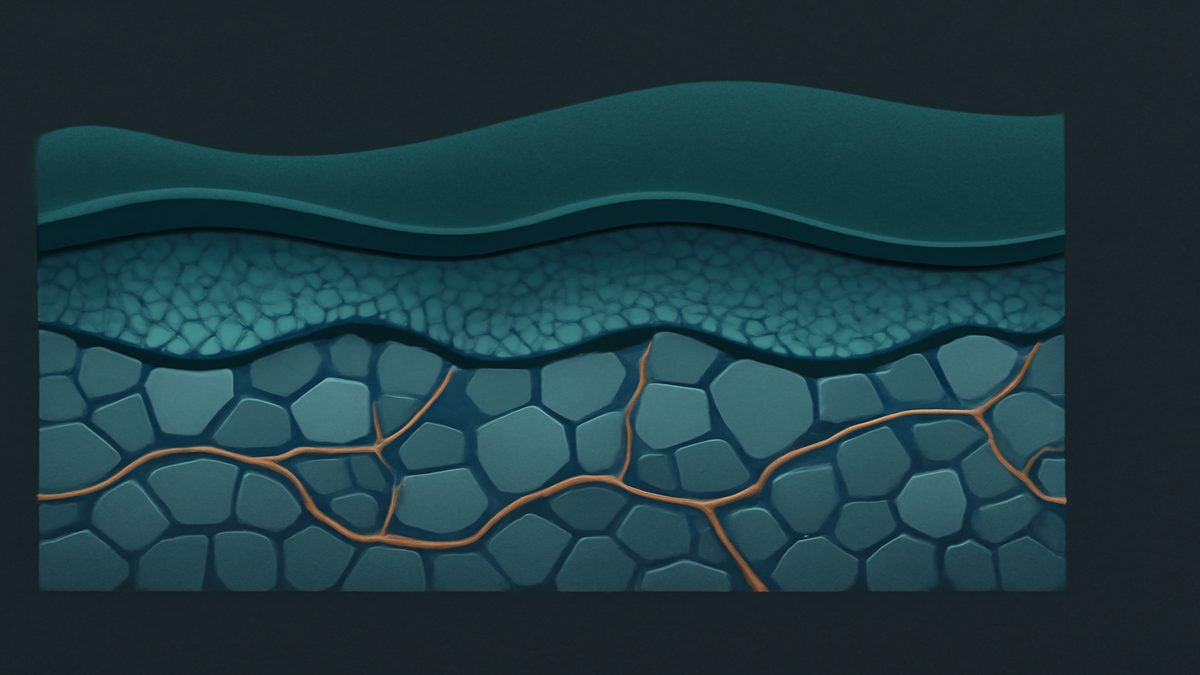
Spray deposition of compositional gradients and immobilized gel electrolytes is being examined as a route to couple ion-transport pathways with interphase stability in silicon, lithium-sulfur, and solid-state cells.
Homogeneous slurry casting often produces uniform porosity and composition that cannot simultaneously optimize electron and ion pathways, leading to localized lithium depletion during fast charge. Ultrasonic spray methods now allow deliberate placement of porosity near the separator and carbon enrichment near the current collector, directly addressing the transport asymmetry that accelerates degradation. Parallel work on UV-cured gel films deposited in the same manner replaces free liquid with a thin, pinhole-free polymer layer that can be formed directly on the graded electrode. These approaches shift the design problem from bulk electrolyte properties toward controlled spatial variation of both microstructure and interphase chemistry.
The same spray platform is being applied to moisture-sensitive solid-state systems inside glovebox environments, raising questions about how droplet size, drying kinetics, and substrate temperature interact with salt solubility and polymer curing. Evidence remains largely at the electrode or half-cell level; full-cell data under stack pressure and defined temperature windows are still required to judge whether the gradients survive repeated volume changes.
The essentials
Graded electrode microstructures via ultrasonic spray A UCL thesis demonstrates spray deposition that places higher porosity at the separator-facing side and carbon enrichment at the current-collector side in lithium-sulfur, solid-state, and silicon electrodes. The resulting asymmetry is intended to mitigate uneven lithium depletion during fast charge. Post-mortem evidence linking the gradient to reduced loss of lithium inventory is still needed.
UV-cured gel polymer films on graded electrodes An ACS Omega study reports ultrasonic spray of a low-viscosity methyl-methacrylate precursor followed by in-place UV curing to produce thin, pinhole-free gel layers. The process eliminates free liquid and the conventional separator while enabling direct formation of an artificial interphase on the electrode. Roll-to-roll compatibility and material utilization above 95% are claimed, yet long-term adhesion under cycling-induced volume change remains untested at the cell level.
Phase-field modeling of dendrite asymmetry in sodium solid-state cells An arXiv preprint applies a phase-field model informed by DFT to polycrystalline Na₃SbS₄ with either pure sodium or Na-Sb alloy anodes. The simulation shows that dendrite stripping during discharge is intrinsically asymmetric, leaving residual filaments that promote re-penetration on the next charge. Experimental validation of the predicted filament morphology under varying stack pressure is still absent.
Nonflammable electrolyte with altered Li⁺ desolvation A Nature Communications paper examines a nonflammable formulation whose solvation structure accelerates Li⁺ desolvation at the interface. The work links this change to improved high-voltage stability and reduced thermal-runaway risk, but does not report whether the same solvation modification can be maintained inside a sprayed gel matrix.
Spray-based immersion cooling under fast-charge conditions A Tech Xplore report describes a dielectric-liquid spray system that maintains stable pack temperatures during fast charge while cutting liquid consumption by roughly 85% relative to full immersion. The approach addresses heat removal at the cell surface but does not yet address internal temperature gradients created by the graded electrodes described above.
Mechanism and evidence
The strongest mechanistic signal is the deliberate spatial decoupling of ionic and electronic pathways through porosity and carbon gradients. Spray deposition supplies the spatial resolution that slurry casting lacks, yet the supporting data are still dominated by ex-situ imaging and single-electrode cycling. No study in the current set provides operando visualization of lithium concentration profiles inside a full cell that contains both a graded electrode and a sprayed gel layer. Without such measurements, the link between the engineered gradient and reduced loss of lithium inventory remains inferential.
Materials and interfaces
Several electrolyte-design papers emphasize rigid polyanions or balanced solvation to raise lithium transference and suppress anion decomposition. These molecular-level changes are complementary to the spray-deposited architectures, but integration has not been demonstrated. Silicon-anode binder work focuses on interfacial-mechanical coupling, yet none of the reported binders has been tested on the carbon-rich collector side of a sprayed gradient electrode. Solid-state sodium modeling highlights the role of grain boundaries in dendrite propagation, an issue that sprayed interphase layers might mitigate if they can conformally coat polycrystalline surfaces.
Scale-up, safety and manufacturing
Ultrasonic spray offers high material utilization and glovebox compatibility for moisture-sensitive salts, but the requirement for multiple passes and precise droplet control introduces new process variables whose effect on defect density at square-meter scale is unknown. Spray cooling reduces external fire risk under fast charge, yet internal heat generation within a graded electrode still depends on the local tortuosity created by the deposition process. No study quantifies how residual solvent or incomplete curing in the gel film would alter thermal-runaway thresholds.
Quick Radar
- Phase-field model for Na₃SbS₄: Predicts asymmetric dendrite stripping; the next required measurement is whether residual filaments persist after full discharge at defined stack pressure.
- Spray-deposited gel films: Eliminate the separator yet introduce a new failure mode if pinholes form during roll-to-roll curing.
- Nonflammable electrolytes: Enhanced desolvation has not been evaluated inside polymer matrices deposited by the same ultrasonic method.
- Graded silicon electrodes: Place carbon enrichment at the current collector; the mechanical integrity of this interface under repeated expansion remains unquantified.
- Spray cooling: Reduces liquid volume but does not address whether internal temperature gradients in graded electrodes exceed the external cooling rate.
- Amino-silane bridging in polymer-ceramic composites: Improves interfacial compatibility; compatibility with spray-deposited electrodes has not been tested.
- Bacterial-cellulose-derived carbons: Proposed for supercapacitors; their tortuosity when used as conductive additives in sprayed battery electrodes is unknown.
Closing
The practical question for the coming week is whether the transport benefit of a porosity gradient survives when the same electrode is paired with a sprayed gel electrolyte under realistic stack pressure and temperature.
Sources
- Nature Portfolio - Batteries: High-voltage and high-safety lithium-ion batteries enabled by nonflammable electrolyte with enhanced Li+ desolvation behavior - https://www.nature.com/articles/s41467-026-75482-y
- Nature Portfolio - Batteries: Fast lithium-ion transport in polymer electrolytes with rigid polyanions - https://www.nature.com/articles/s41565-026-02229-7
- Tech Xplore - Energy & Green Tech: Finding the sweet spot for safer, longer-lasting lithium metal batteries - https://techxplore.com/news/2026-07-sweet-safer-longer-lithium-metal.html
- arXiv - Solid-state batteries query: Phase-Field Simulation of Dendrite Evolution in All-Solid-State Sodium Batteries during Cycling - https://arxiv.org/abs/2607.15387v1
- Tech Xplore - Energy & Green Tech: Enhancing battery safety under fast charging conditions through spray-based immersion cooling - https://techxplore.com/news/2026-07-battery-safety-fast-conditions-spray.html
- Nature Portfolio - Batteries: Synergistic interfacial-mechanical binder design for high-areal-capacity and long-lifespan Si-based negative electrodes in practical pouch cells - https://www.nature.com/articles/s41467-026-75167-6