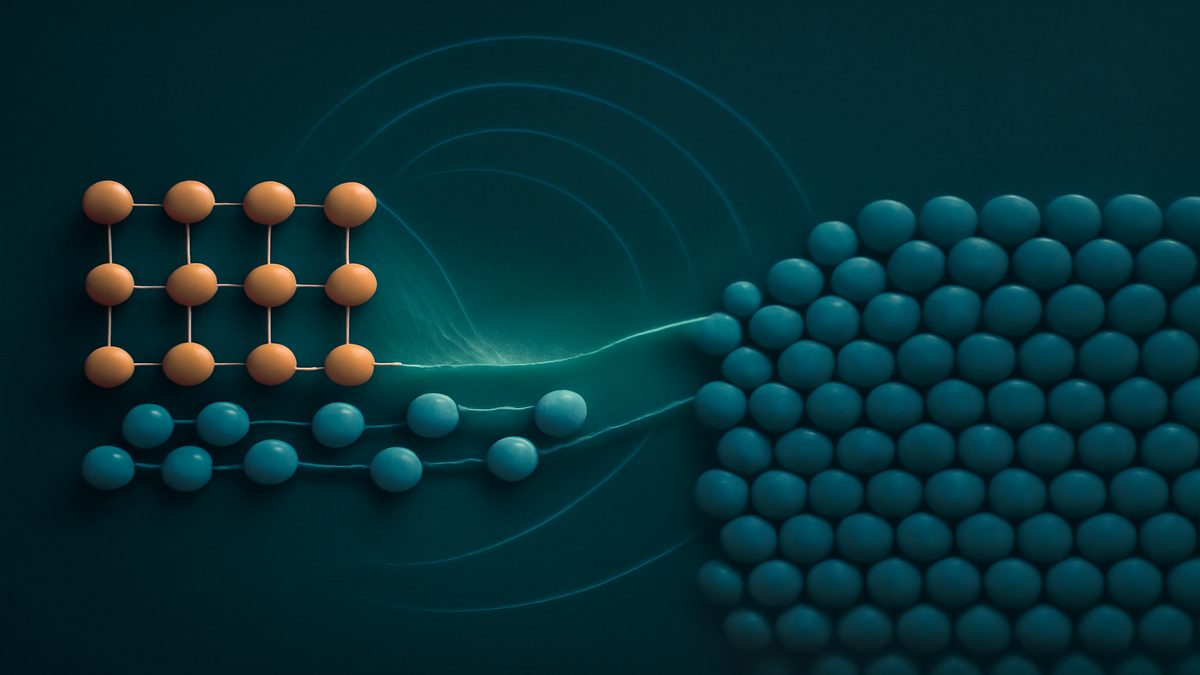
Interfacial ion transport and electronic leakage remain coupled constraints on fast charging and stability across liquid and solid electrolytes.
Operando measurements at the cathode surface now capture solvent and anion behavior under bias, while polymer and inorganic solid electrolytes show that shuttle carriers and residual electronic conductivity can dominate both rate capability and self-discharge. Graphite anodes continue to reveal that desolvation kinetics, rather than bulk diffusion alone, decide whether co-intercalation occurs. These observations converge on a practical limit: transport improvements at one interface frequently shift the failure mode to another.
Solid-state work adds a further layer. Thin-film LiBH₄ studies indicate that mechanical stress can preserve conductivity in high-iodine compositions, yet the same materials may permit electronic leakage that drives continuous self-discharge. Preprints on cathode-limited fast charging formalize the problem as a boundary-control task where surface-to-bulk concentration gradients must be kept within bounds. The common experimental gap is the absence of simultaneous pressure, temperature, and post-mortem interface data that would test whether the proposed transport fixes survive realistic stack conditions.
The essentials
Operando far-ultraviolet spectroscopy at the cathode/electrolyte boundary Attenuated total reflectance measurements track interfacial species formation in real time, linking solvent decomposition directly to local potential and current density rather than to bulk electrolyte composition.
Li+ shuttle carriers in solid polymer electrolytes A designed shuttle species decouples ion motion from polymer segmental relaxation, reducing concentration polarization under high-rate conditions while preserving the mechanical integrity required to suppress dendrites.
Dendrite suppression through surface inoculation Targeted surface modification alters lithium nucleation energetics, shifting deposition from tip-driven growth to more uniform fronts, although the longevity of the modified layer under repeated plating-stripping cycles remains unquantified.
Desolvation-limited propylene carbonate co-intercalation in graphite Kinetic measurements show that the energy barrier for solvent removal from the Li+ solvation sheath controls whether co-intercalation proceeds, offering a route to suppress exfoliation without changing the bulk solvent.
Electronic conductivity as a source of self-discharge in solid electrolytes Non-negligible electronic transport through the solid electrolyte enables continuous lithium shuttling between electrodes even at open circuit, producing capacity loss that is independent of conventional faradaic side reactions.
Mechanisms and trade-offs
The clearest mechanistic signal is the repeated demonstration that ion-transport improvements are incomplete unless electronic leakage and desolvation barriers are measured in the same experiment. Shuttle-bus polymers and stress-stabilized LiBH₄ films both improve apparent conductivity, yet neither study reports simultaneous electronic-conductivity data or critical-current-density values under stack pressure. The arXiv cathode-transport model supplies a formal minimum-time framework but assumes constant diffusivity and one-dimensional geometry; its predictions will shift once concentration-dependent transport and contact-loss mechanics are included. Evidence quality is therefore mechanistic at the interface level but still lacks cell-level closure that would confirm whether the proposed fixes survive realistic electrode loadings and temperature windows.
Materials and cell-system news
Cathode/electrolyte interfaces receive direct spectroscopic attention, while anode work centers on nucleation control and solvation-shell dynamics. Graphite studies isolate desolvation as the decisive step for co-intercalation, and zinc-iodine systems explore Lewis-acid additives that simultaneously stabilize the metal surface and modulate iodine redox. Sodium-ion NASICON cathodes are examined through ligand-oxygen delocalization, yet the link between this electronic-structure change and long-term oxygen-release or transition-metal dissolution is not yet addressed. Across these chemistries, the unresolved variable is how surface films formed under one set of transport conditions evolve when current density or temperature is altered.
Scale-up, safety and policy
No item supplies concrete manufacturing constraints or safety-test protocols. The UK DRIVE35 award for DryTab surface technology is noted only as a funding event; the technical specification of the surface layer, its compatibility with dry-electrode processing, and any change in interfacial resistance remain unreported. Ingestible-battery work on magnesium-molybdenum trioxide couples is confined to gastrointestinal safety and does not intersect with high-energy or fast-charge requirements.
Quick Radar
- Molecular-dynamics predictions: Ionic conductivity in solid electrolytes remains sensitive to trajectory length, cell size, and sampling adequacy, risking mis-ranking of candidate materials.
- Hybrid quantum-classical simulation: A proposed approach for electrode-electrolyte electron-transfer kinetics requires validation against experimental Tafel slopes.
- Potassium-metal deposition: Steered toward bottom-up growth by metal sub-nanoclusters that increase potassiophilicity, yet the effect on Coulombic efficiency under lean-electrolyte conditions is untested.
- Aggregated solvation clusters: Formed with a weakly coordinating pseudo-diluent accelerate Li+ transport at low temperature, but the impact on oxidative stability at the cathode remains open.
- Amino-acid additives: Modulate the interface of hollow Cu2O composites in aqueous zinc-ion cells, shifting capacity retention across temperature, while the underlying coordination chemistry is not fully mapped.
Closing
The practical question for the coming week is whether any of the reported transport or interface modifications have been evaluated under simultaneous mechanical pressure and variable temperature in full-cell formats.
Sources
- Nature Portfolio - Batteries: Li+ Shuttle bus enables safe fast ion transport in solid polymer electrolytes - https://www.nature.com/articles/s41467-026-78041-7
- Nature Portfolio - Batteries: Electrolyte design for future batteries - https://www.nature.com/articles/s41578-026-00958-8
- EKL Batteries: Operando Attenuated Total Reflectance Far-Ultraviolet Spectroscopic Analysis at the Cathode/Electrolyte Interface - https://onlinelibrary.wiley.com/doi/10.1002/anie.6529709?af=R
- Batteries News: Avocet Battery Materials Secures DRIVE35 Funding to Accelerate DryTab Surface Technology - https://batteriesnews.com/avocet-battery-materials-secures-drive35-funding-to-accelerate-drytab-surface-technology/
- Tech Xplore - Energy & Green Tech: Stress-assisted conductivity retention in high-iodine LiBH₄ thin films - https://techxplore.com/news/2026-09-stress-retention-high-iodine-libh.html
- EKL Batteries: Desolvation Kinetics Governs Propylene Carbonate Co-Intercalation in Graphite Anodes - https://advanced.onlinelibrary.wiley.com/doi/10.1002/adma.75125?af=R
- Nature Portfolio - Batteries: Inoculating lithium against dendrites - https://www.nature.com/articles/s41563-026-02757-6